
Why Peptide Research Is Putting Greater Focus on Sample Quality

Peptides Are Moving Into a More Detailed Research Era
The conversation around peptides is becoming more sophisticated as researchers look beyond their basic biological roles and examine how these molecules can be studied with greater precision, see the research here as current scientific discussions increasingly emphasize molecular identity, analytical testing, sample handling, and the quality of evidence behind peptide-related claims. This shift matters because meaningful research depends not only on what scientists investigate but also on how accurately the material under investigation is identified and measured.
Small Molecules With Complex Biological Roles
Although peptides consist of relatively short sequences of amino acids, their biological functions can be remarkably diverse. Some naturally occurring peptides participate in signaling pathways, communication between cells, metabolic activity, and other physiological processes. Their effects depend on molecular structure and biological context, meaning that researchers need to examine individual peptides according to their specific characteristics. Treating peptides as a single uniform category can therefore overlook important differences between molecules.
Why Modern Research Looks Beyond the Molecule
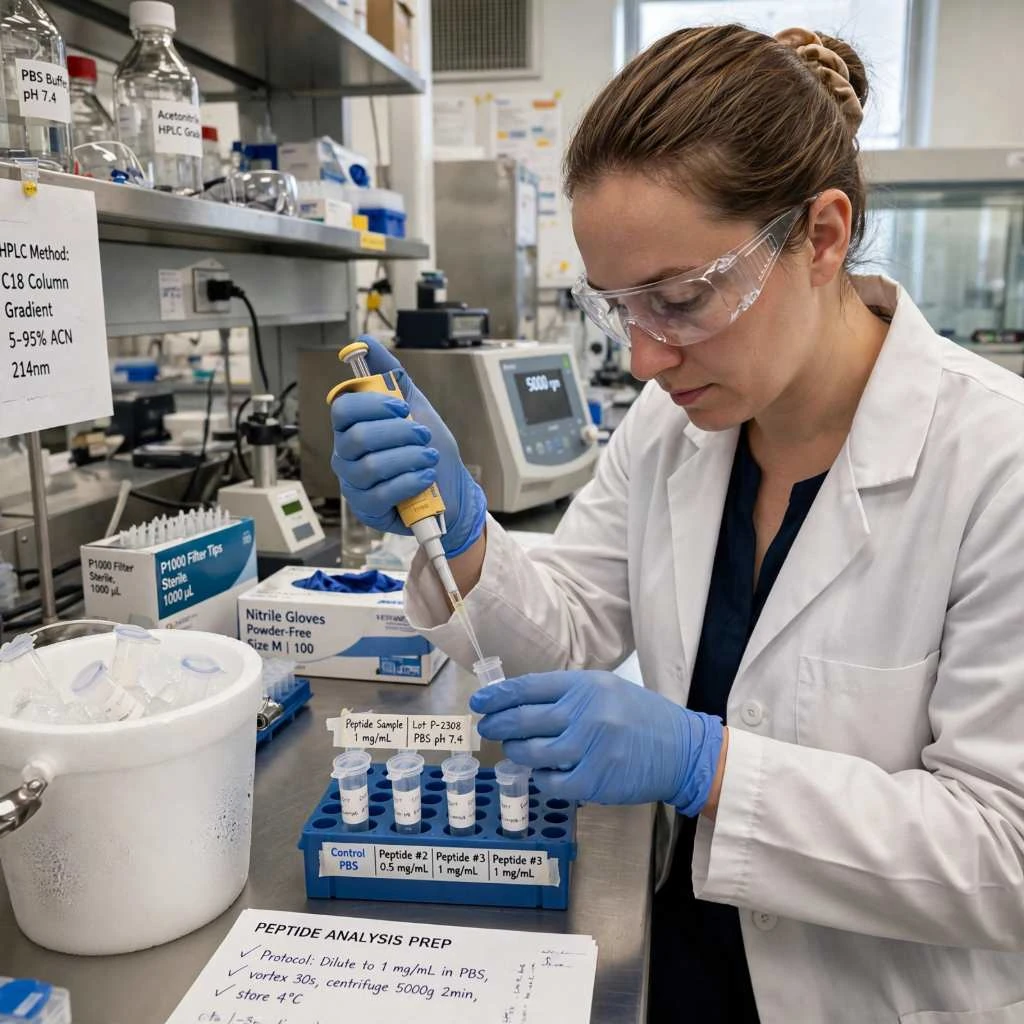
Studying a peptide involves more than identifying its sequence. Researchers may investigate molecular structure, purity, stability, biological activity, and interactions with other substances. Advanced laboratory techniques can help scientists determine whether a sample corresponds to the material expected for a particular experiment. These analytical steps become especially important when researchers are attempting to reproduce previous findings or compare results from different laboratories.
Sample Quality Can Shape Scientific Conclusions
The material used in an experiment can influence the quality of the information produced by that experiment. If a peptide sample contains unexpected impurities, has degraded during storage, or differs from its stated composition, analytical results may become difficult to interpret. For this reason, researchers may evaluate identity and purity alongside other characteristics before using a sample in a study. Proper characterization can support more consistent research and help scientists understand whether observed results are actually connected to the peptide being examined.
Scientific Databases Provide a Broader Evidence Base
Researchers and readers can explore established biomedical literature through NCBI, which provides access to scientific publications and biological information. Reviewing peer-reviewed research can help place peptide findings into a wider scientific context. Studies covering analytical techniques, peptide characterization, biological mechanisms, and experimental design can offer useful background for understanding why sample quality matters. Reliable scientific databases are particularly valuable when a peptide is being discussed online without enough information about the research supporting a specific claim.
Analytical Documentation Adds Transparency
Documentation can also play an important role when peptide materials are prepared for laboratory investigation. A certificate of analysis may report information such as sample identification, measured purity, testing procedures, and analytical results. While the exact information varies between suppliers and laboratories, such records can help researchers understand what has been tested and under which conditions. However, analytical documentation should not be confused with proof of clinical effectiveness or authorization for human use.

Handling Is Part of the Research Process
A carefully characterized peptide can still present research challenges if it is improperly stored or handled. Temperature, moisture, preparation procedures, repeated exposure to unsuitable conditions, and storage duration can potentially affect sample characteristics. Researchers therefore establish handling procedures appropriate to the material and study design. Maintaining consistent practices from preparation through analysis can reduce unnecessary variables and make experimental observations easier to interpret.
Research Findings Need More Than One Experiment
Scientific understanding develops gradually. An observation made in a laboratory may encourage further investigation, but it does not automatically establish a medical benefit. Researchers often move through multiple stages of investigation before a biological finding can support a broader conclusion. Laboratory studies, animal research, clinical studies, and systematic evaluations each contribute different types of evidence. Keeping these stages separate helps prevent preliminary findings from being presented as established health outcomes.
Separating Research From Marketing Claims
The growing popularity of peptides has also created a large amount of online information, ranging from scientific publications to promotional material. This makes critical evaluation increasingly important. Readers should look for specific information about the peptide being discussed, the research model involved, the testing methods used, and the strength of the available evidence. Claims that rely on vague descriptions or isolated experimental findings deserve closer examination before being interpreted as established scientific conclusions.
Better Research Starts With Better Information
A stronger understanding of peptide science comes from connecting molecular information with reliable analytical practices and credible research. Sample identity, purity, storage, documentation, experimental design, and evidence quality all contribute to the larger picture. As peptide research continues to develop, these fundamentals can help researchers produce results that are clearer, more reproducible, and easier for other scientists to evaluate.
Next Stage of Peptide Science
Peptide research is entering a period in which precision is becoming just as important as discovery. New analytical technologies may allow researchers to examine peptide materials with increasing detail, while expanding scientific literature can improve understanding of their biological roles. The future of this field will depend not simply on discovering new peptide applications, but on generating dependable evidence through careful testing and transparent research practices. For anyone following developments in peptide science, attention to sample quality and scientific methodology provides a much stronger foundation than relying on broad claims alone.